
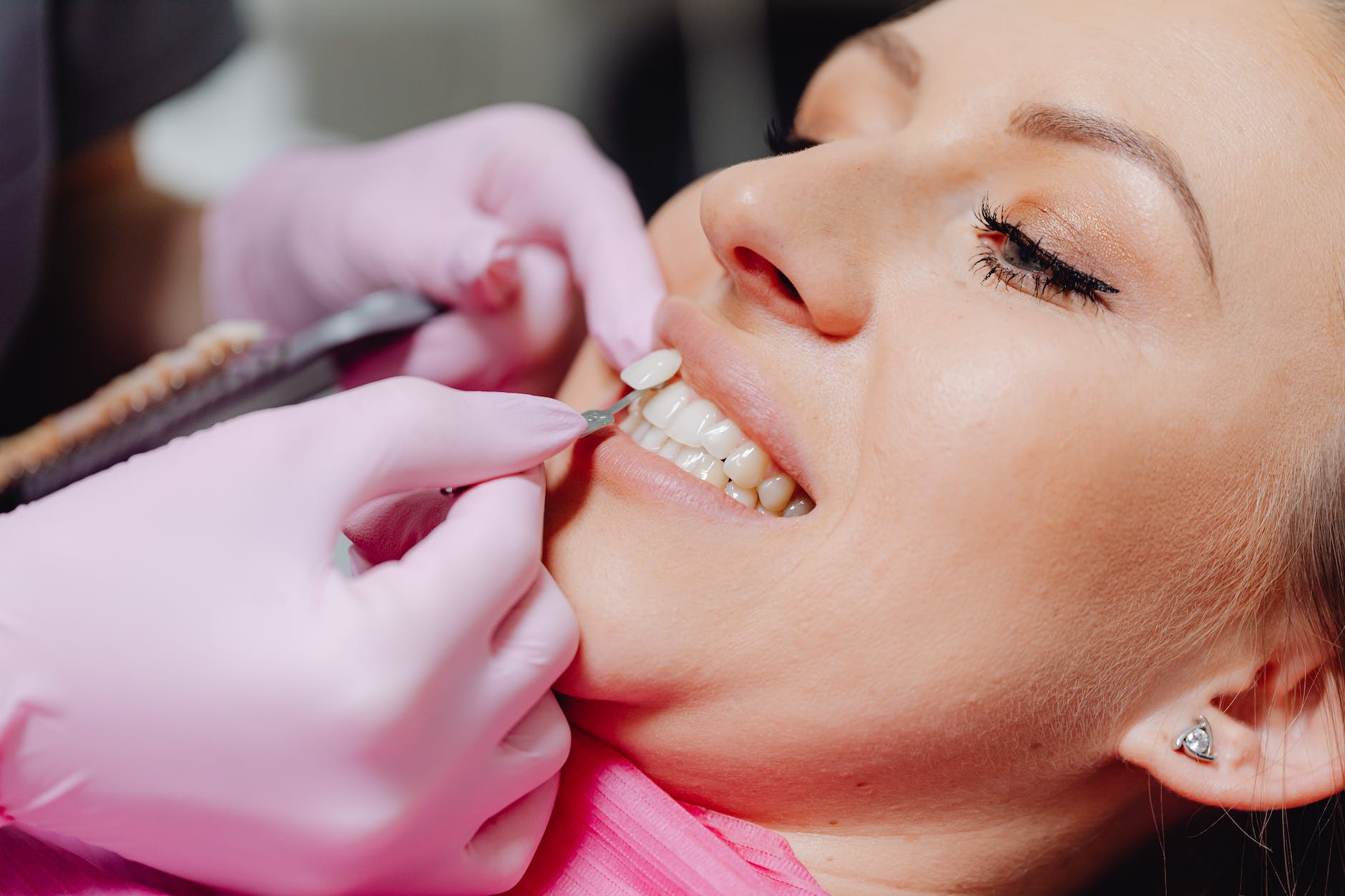
Porcelain veneers are much harder to stain than your natural enamel, but years of drinking staining beverages (coffee, tea) without proper dental hygiene will eventually cause discoloration. Can Veneers Be Whitened? Unfortunately, porcelain does not respond to traditional whitening treatments in the same way that natural enamel does, so it is not recommended that you try to whiten them. Instead, you can talk to your dentist about the cleaning options available to you and the steps that are necessary to prevent restaining in the future. Why Whitening Doesn’t Work The peroxides that are used as the active ingredient in practically all whitening substances contain volatile oxygen molecules. These molecules can penetrate the porous surface of your teeth, coming into contact with the surface stains in your enamel. Upon contact, these oxygen molecules break apart the bonds that hold those stains in place, effectively removing them. Unfortunately, porcelain veneers are specifically made to resist staining. They’re made to be non-porous. This way, the majority of staining beverages and foods do not have an opportunity to take hold. This proves great for patients who maintain a healthy oral hygiene routine. Also for those who use basic precautions to reduce staining. Why? It means that their veneers are likely to maintain their original color until ready to be replaced. Sadly, it also means that traditional whitening will not work on your veneers. Available Cleaning Options of Stained Veneers Whitening treatments may not work, but that doesn’t necessarily mean that your dentist or Dr. Segui won’t be able to reduce or eradicate the staining on your veneers. A professional cleaning is usually all it takes to mitigate early signs of staining. During your visit, your dentist will carefully clean and polish your natural teeth and veneers to give you the best results possible. Unfortunately, if you haven’t been attending your professional cleanings every six months, then it is possible for the staining to get out of hand. If you have serious stains as a result of years of irregular dental care, then your veneers may require replacement. This may also be true if your veneers are older, made from an inferior material like resin, or if your gums have begun to recede. Preventing Restaining By Brushing When it comes to keeping your teeth as white as they were when you first got your porcelain veneers prevention is key. You should be brushing your teeth at least twice a day. This is especially important if you have a fondness for staining foods or beverages such as beets, turmeric, coffee, dark sodas, or red wine. The truth is it’s actually best to brush directly after consuming staining food or drink. The one warning to that is you don’t want to immediately brush after consuming something acidic. Have you had coffee or wine, for example? Then you should always rinse your mouth with water and wait a few minutes before brushing. Brushing your teeth with the acidic substance still in your mouth could actually damage your enamel further. This proves due to its weakened state. Other Prevention Tools In addition to brushing frequently, you can also reduce staining by limiting direct contact between staining drinks and your teeth. Reusable straws can be quite useful in this case. However, you should be aware that it isn’t advisable to drink hot beverages through a straw. It could result in burns to your hard palate, tongue, and esophagus. If you’re drinking a hot, staining beverage while on the move, try keeping sugar-free gum on your person. It isn’t perfect, but sugar-free gum can help stimulate saliva production to reduce the chance of staining. This preventative measure can help give you more time until your next brushing

Questions To Ask Your Dentist Before Getting Veneers
Dental veneers offer one of the quickest paths to the bright, healthy smile of your dreams. Whether you feel self-conscious about stained teeth or wish to cover over a tooth that is chipped, veneers can offer a satisfying solution. Before you get your veneers, however, it is important to have all the necessary information about what they are, how they work, and what you can do to ensure their longevity. The best way to gather this information is through a one-on-one consultation with your dentist. To guide your consultation, here are a few questions you might ask. What to Ask About Dental Veneers? 1. How long does it take to get dental veneers? The process of getting dental veneers can take two or three appointments, and before you begin, it is wise to ask about the timeline. Generally, you will have an initial aesthetic consultation where records will be taken. This will include measurements and analysis of the facial structure to ensure the right fit and look for your veneers. The second appointment will be the longer preparation appointment. This is usually completed 2 weeks after the initial consultation. The teeth are minimally reduced (with sometimes no removal of tooth structure) in order to get the right fit for your veneers. The veneers are then made in a dental lab and customized to provide the fit, color, and appearance you desire. The final appointment 2-3 weeks after the preparation appointment is the final fitting of the veneers or what we call the cementation appointment. At this appointment, the veneers will be adhered to your teeth with chemical retention through bonding the porcelain to your tooth structure. 2. Does it hurt to get dental veneers? If you are concerned about a scary or painful visit to the dentist, ask about it upfront. You will likely be greatly surprised by the answer: Most patients report little to no discomfort whatsoever from this minimally invasive process. In fact, the only preparation needed for your veneers is for a thin layer of tooth enamel to be removed; any discomfort you experience during this step will be minor. 3. Am I a good candidate for dental veneers? Dental veneers represent one of the most popular cosmetic dentistry solutions by most dental offices… but does that mean they are right for you? Generally speaking, you are a good candidate for veneers if you can say yes to any of the following: Your dentist will be more than happy to tell you whether veneers will address your aesthetic needs, or whether a different treatment might make more sense. 4. What can I eat with dental veneers? When you have dental veneers, you can largely eat just like always. It is advised that you cut food up with a fork and knife instead of bite into it with your front teeth after getting the veneers. For example, avoid biting into an apple and instead cut it up into pieces. Some foods you might wish to avoid after placement of veneers include: 5. What can I do to keep my veneers clean? Naturally, when you get dental veneers, you will want to do everything in your power to keep them looking bright, fresh, and new. Your dentist will be glad to furnish you with some tips, but generally speaking: With these basic essential steps, you can keep your veneers looking nice and clean. 6. Are there any downsides to getting veneers? Most patients who get dental veneers really love them. With that said, there can be some potential downsides, and it is important to clarify those with your dentist. Some possible issues with dental veneers include: A good dentist will help you make a truly informed decision about veneers… and that means being honest about both the pros and the cons. 7. How long will dental veneers last? Depending on how well you care for your dental veneers, they may last you anywhere from 10 to 20 years. With that said, you will usually need to have your veneers placed sooner or later. Because veneers require the enamel of your teeth to be shaved down (although minimally), the process is irreversible; so, when your veneers start to wear down, you will need to get new ones. 8. What are the alternatives to dental veneers? Before deciding to get dental veneers, it makes sense to ask about other options for achieving healthy, white teeth. Most dentists who offer veneers also provide a range of other cosmetic solutions, and in some cases, they may recommend you start with basic tooth whitening. It certainly never hurts to explore all the options available before jump starting on one. 9. Can I see some examples from your previous patients? If you are unsure about what dental veneers look like, or have questions about the final outcomes, ask your dentist to see some examples of their past work. Most dentists are more than happy to show off their patient success stories, and to provide you with greater confidence in your own outcomes. Please take a look at our gallery for before and after outcome. Learn More About Cosmetic Veneers As you consider getting dental veneers, do not hesitate to ask your dentist any questions that come to mind. To set up a veneers consultation appointment at Cosmo Dental with Dr. Isabelle Segui or with our skilled associates, we welcome you to contact our office at your next opportunity.


